A great example of a game adapted for television, that still exists as its own thing.
“War. War never changes.”
These four simple words have been carved onto the minds of a generation of gamers. Almost two generations, by now. The original Fallout came out on PC in 1997 and was soon followed by a sequel. Though the series went into hibernation for a short while, it returned, re-conceptualized and modernized for a new audience. Fallout 3 and its DLC, New Vegas, invited old players to return to the world of Fallout while bringing in a younger generation. Since then, Fallout 4 and Fallout 76 have continued the heritage of the game, exploring a post-apocalyptic future where bizarre creatures and outlandish technology blend with a horrorscape that acts as a tribute to man’s hubris.
The changes that marked the series’ evolution from the first Fallout to the most recent entries were not always celebrated. The first games were trimetric perspective role playing games in which players were given a great deal of freedom with their character builds and the way they responded to in-game characters. The latter games switch to first person perspectives and reduced some of the freedom in favor of storytelling and gunplay.
Yet what has remained constant about the Fallout series has been its odd blend of humor, horror, and sheer outlandishness. The Fallout world is set in the post-apocalypse, one in which the world is a nuclear wasteland. A war between the United States and its enemies led to global nuclear war, and the United States, by the 2100s, is a shell of itself. The government has long collapsed, independent republics have sprang up, factions fight for control, and the majority of the country is covered in radiation, deserted wastes, and mutated monsters. This is normally where the plot of one of the games would set the player loose into the world. In the Fallout television series, it is instead three unique individuals who become the cornerstones around which a new Fallout story is told.
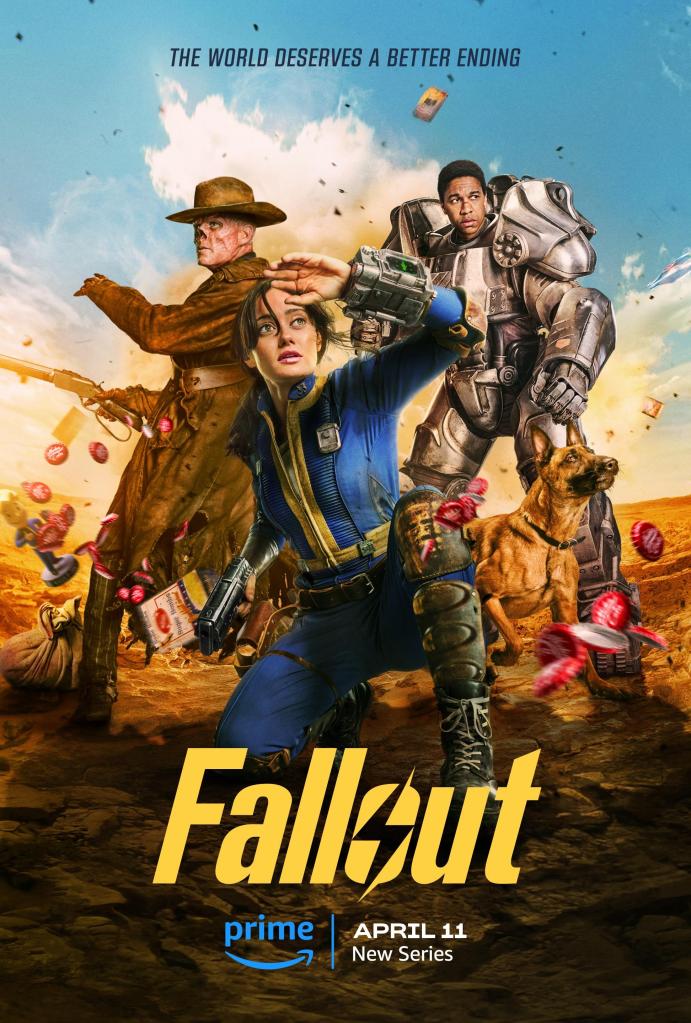
In telling you about these characters, it’s also possible to tell you a little bit about the factions that inhabit the Fallout world. Cooper, the revolver firing, cowboy looking Ghoul is a bounty hunter. In a world without laws, he takes what he can get to survive. He’s also a Ghoul, which in the world of Fallout, means it’s difficult to kill him because he’s essentially already dead.
Maximus is a shy, reluctant member of the Brotherhood of Steel. The Brotherhood is a paramilitary group founded by remnants of the U.S. Army after the war that makes it its mission to preserve advanced technology. As a member, Maximus’ job is to make sure only the Brotherhood has possession of this technology, since humans have shown they can’t be trusted with it.
And finally, there’s Ella, a Vault Dweller. Vault Dwellers are at the core of almost every Fallout game. To save humanity from war, Vault-Tec created vaults around the country to ensure humanity would survive. In most Fallout games, time and circumstance forces one of the inhabitants of the vault up to the surface to become a hero of the Wasteland. It’s no different for Ella, the naive Vault Dweller who is forced from her home to search the wastes for clues to her past.
You may have noticed a dog in that picture, too. That’s Dogmeat. Don’t worry. Everyone loves Dogmeat.
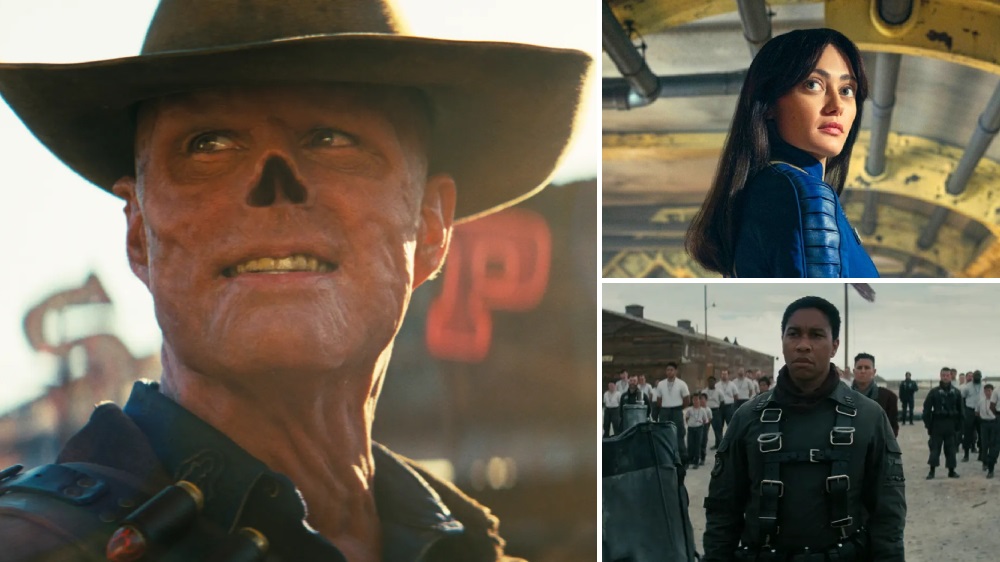
Three people in a nuclear wasteland, some fighting for factions, some fighting for themselves. The show thrives when these characters are pitted against one another, because each represents a different philosophy. In a world as bleak as the Wasteland, the show often asks the audience which of these characters is best suited to survive. The show also asks whether surviving is enough. Maximus often represents a pragmatic middle ground, a character who reluctantly does as he’s asked and tries to balance being kind with the cruel reality of his existence. Cooper has no qualms about being as vicious as necessary in order to get what he wants and survive in a world that does not care about who makes it out alive. And Ella represents an almost naively bright source of hope, someone who continues to try and find the good in people and situations long after others give up. These conflicting ideologies and characteristics make interactions between these characters that much more dynamic, and each is pursuing the same goal for vastly different reasons. The viewer is asked to decide which ideology they most align with.
The show cannot be divorced from its settings and environment, of course. The game series thrived partly because of the unique world it created, and the show benefits from the same. Irradiated bears that can claw through steel represent one threat in this world. Gigantic mutated behemoths form another. Brains contained in jars give a form of life eternal for some, while hovering multi armed robots serve as assistants to people in the Wasteland. These interesting and unique creatures all work within the context of the show because it is very true to its gaming roots. It tells an intriguing narrative from start to finish. However, that narrative is one part humor, one part horror, one part ultra violence. Genuine, heart touching conversations happen, with genuinely hilarious scenes. These are broken up by mysterious and creepy segments in which the remnants of the old United States are explored and horrific ancient experiments uncovered. And when violence breaks out, death happens in brilliant and joyously excessive ways. If you are squeamish, these fight scenes may be a bit too much.
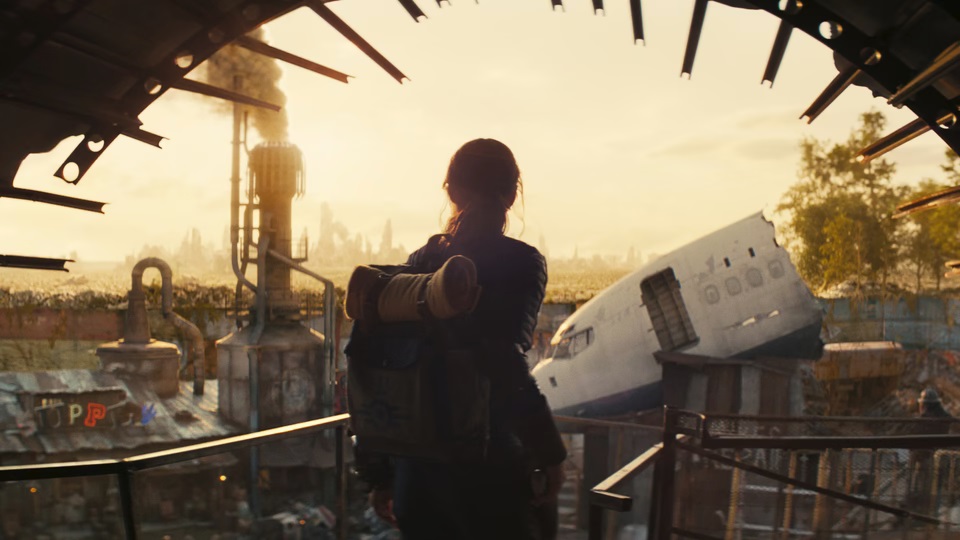
The Fallout games worked because they balanced these different aspects so well, and the show does the same. While a central story line ties all eight episodes together, the focus of the show is on the individual experiences of each of the protagonists as they navigate the Wasteland. Their stories unfold as they essentially chase a McGuffin. At times this may seem to create for an unfocused viewing experience, but the show is not interested in telling a tight, compact story as much as it is exploring its intriguing world as experienced through the lens of each of its central characters. It’s a journey worth taking, and one you should go on with these intriguing individuals.
Fallout is available on Prime Video.
 Just Write