Game Preview: Against the Storm

An intriguing city builder, though one that still needs some refinement.

I love any games that involves building a city, regardless of the conditions. Sim City? You’re building a city. They Are Billions? You’re building a city to protect it from zombies. Frostpunk? You’re building a city meant to stand against a generational storm that will freeze to death anyone who isn’t properly protected.

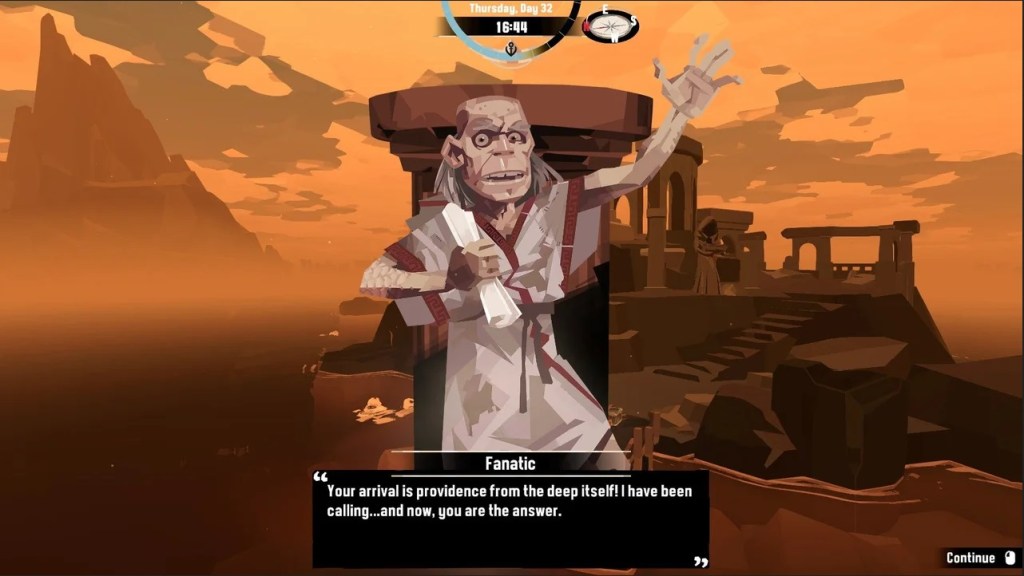
So you can imagine that when I saw the premise for Against the Storm that I was intrigued. To break down the general ‘plot,’ as it were, the world is plagued by a recurring storm known as the Blight Storm. The world will be at peace for a few years before this storm wipes out every town and settlement in existence in a process known as the Blight Cycle. When the Blight Storm arrives, the only safe place to flee is to the Smoldering City, where the power of the Scorched Queen is able to hold the Blight Storm at bay. Once the storm is over, people can once again go back out into the world to establish their colonies.
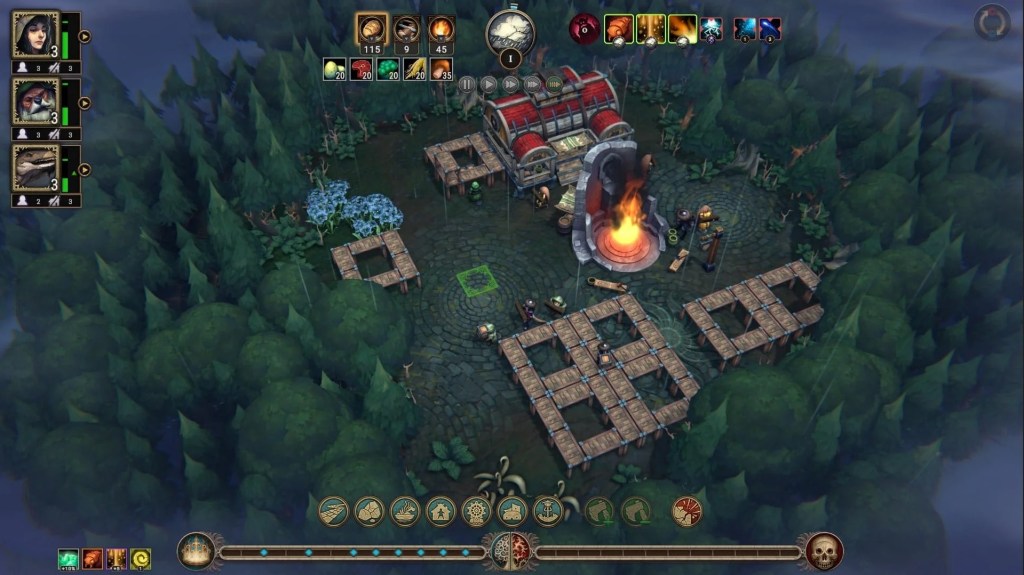
Against the Storm starting colony.
You start from humble beginnings.

This is where the city builder aspect of the game kicks in. As the queen’s viceroy, it’s your job to rebuild the colonies that have been wiped out. As a rogue lite, every cycle resets the game and randomizes what you will find on the map as you engage in a another process of colony building. You start near the Smoldering City, build a colony, and if you are successful, continue to build successful colonies increasingly outward.

What this means for the player is that they must both make decisions on the world map regarding where they want to place their next colony, and then actually build the colony on the colony map. In the world map, you are afforded the chance to use your experience points to buy upgrades from the Smoldering City. You can purchase new buildings, for instance, which makes it easier to establish a colony. Or, you can buy resources that you can use once you enter the colonization phase of the game, making it easier to establish a successful colony.
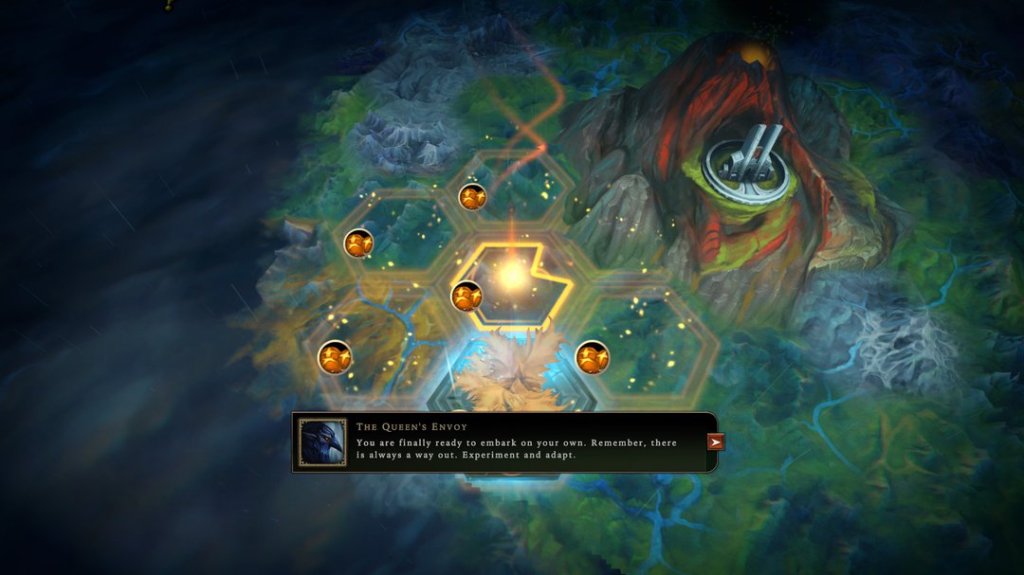
Against the Storm worldmap.
The world map is where you actually choose the location of your next colony.

The colony map is where you’ll actually be spending most of your game time, however. Every colony is on a timer. Spend too long building the colony and the queen will run out of patience, ending your game. That impatience grows on a timer you can visibly see. However, achieving goals extends the amount of time you have, reducing her impatience. Achieving goals also fills up your achievement bar and, when that’s full, you win the map you’re currently playing on. These achievements typically take the form of goods that are being requested by the Smouldering City. For instance, you may need to put together 10 packs of crops or 15 packs of building materials that will benefit the city and increase your chance of winning the current map. There are other, more interesting ways of building your achievement meter, though. As you carve your way through the woods to make more space for your town, you’ll find abandoned goods you can ship back. Again, not a very intriguing way of building your experience. Much more interesting are the mysterious threats you’ll find.

On your colony map, you’ll encounter glades blocked in by woods. Most of these hold new sources of food or materials for you to acquire. Others, though, hold threats. These dangerous glades can be filled with all kinds of dangers. In my play through, I’ve encountered escaped convicts, ancient heretical totems, abandoned ships, and mysterious temples. Fail to deal with these threats in a timely manner, and you could lose resources. In one instance, I took too long dealing with a mysterious temple we found and malevolent spirits burst out and killed a quarter of my town. How you deal with these threats, though, will influence your game. You could tear down a temple, for instance, and take the goods for yourself. Or, you could plunder its deepest secrets and send what you find back to the Smouldering City. Making decisions that benefit the queen will typically reward you with boosts to your experience meter.
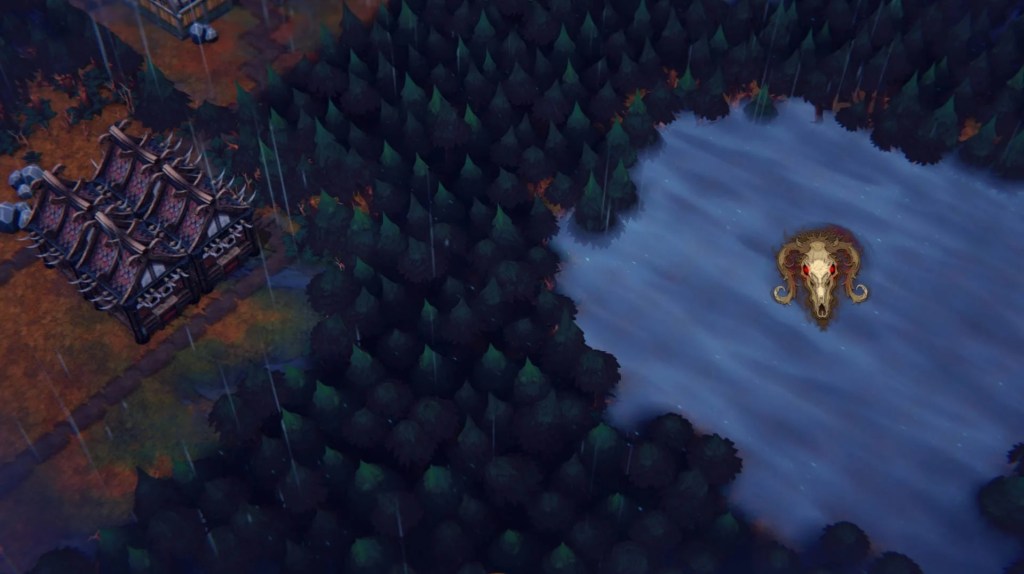
Against the Storm dangerous glades.
Cut your way to the east and you may find a haunted ghost ship, or worse.

The game is still in early access and I do have gripes about the game. There’s a lot of fun in seeing so many types of buildings. For instnace, you can have a tavern, a smokehouse, a cookhouse, a lumber mill, and a cooperage all in addition to more basic buildings like farms and woodcutter camps. Yet a lot of the time, I found myself thinking that many of the buildings felt redundant. You can greatly expand on what’s available to you over time, especially as you upgrade the Smouldering City from the world map, but after about a dozen hours, I felt like there was just a lot of content for content’s sake. It just felt like the game wanted you to have a lot available for its own sake. Does a town really need both a lumber mill and a carpenter’s cabin that both exist to produce planks of wood?

But I wonder how much of this is related to the directionless feeling of the game, overall. As you expand on the world map, you don’t really feel as if you’re doing it for any purpose except, again, simply to do it. This is something I believe the developers have noted they want to work on, and I think they are currently trying to add an overarching goal to the world map. That would at least give you something to work toward that makes it feel as if all the upgrades are for more than their own sake, or for the sake of simply completing more colonies. This game isn’t like They Are Billions, so playing the individual colony maps doesn’t have the thrill of desperately trying to beat off incoming threats. I also wonder sometimes if I am simply playing the game wrong. I’ve defeated multiple maps but often feel as if doing so requires essentially repeating the same processes. I don’t feel like it should take a dozen hours and three world resets to start feeling as if more intriguing environments or threats were coming. Still, this is a promising game so far and I don’t regret my purchase at all. I look forward to seeing how the overarching goals impact the game and how I feel about the upgrade system. It’s a charming city builder with a unique setting and I look forward to more in the future.

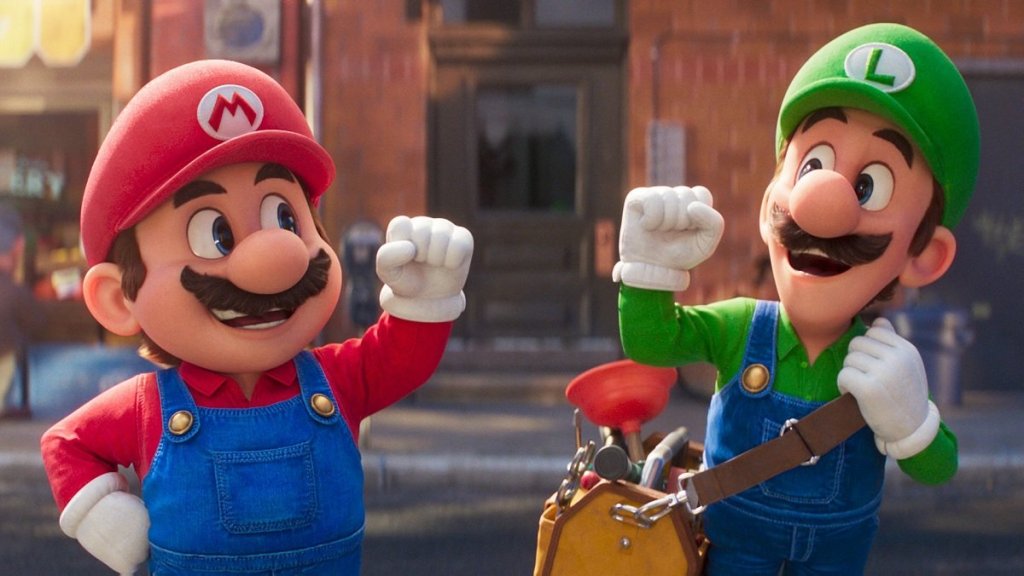
Movie Review: The Super Mario Bros. Movie

The Mario Bros. power up in this family friendly film.


It’s okay to have fun.

It’s strange that I had to keep reminding myself about this throughout the entirety of the Super Mario Bros. Movie. For the last month, the online discourse surrounding this film has been obnoxious. “It’s not as emotionally impactful as a Pixar film!” “There are no deeper lessons learned from the movie!” As if the lack of those things inherently makes a film bad. Neither does “It’s just a kids movie!” make for a good defense of a film.

That’s the thing, though. The Mario movie isn’t a bad film. In fact, it’s a pretty good one if you’re looking to just have fun. It’s bright, it’s silly, it’s humorous, and it’s a visual treat. I truly disliked having to argue with the discourse, in my own head, as I watched the film. That’s my own fault though, of course.

The easiest thing to address about the film is the visuals. How can you not? The Mario movie is so visually bright that almost every scene in the film explodes off the screen. Yet once again, the movie somehow came under criticism from the online mobs. At some point in the last few years, people started expecting every individual strand of a character’s hair to be rendered. That level of attention to detail in Pixar films has caused their films to explode in costs, for negligible gains. Does anybody really care that Mario’s mustache isn’t life like? Is anybody really asking for that? The film has a solidly cartoonish look with exaggerated visuals that are perfect for the material.

Donkey Kong in the Super Mario Bros. movie.
The visuals don’t even look bad.

Musically, the soundtrack borrows from the games for much of the musical cues while also integrating pop hits over different scenes. The original score is fantastic, and the fact that we got a rendition of the beloved DK Rap is a delightful surprise. There is only one scene that comes to mind where the use of a pop track really didn’t fit; I’m thinking specifically of when Take On Me was played over a scene of Mario and Peach driving through the streets on a golf cart. I’m not sure who chose that specific song for that specific scene, but it was the one instance of a track feeling jarring and not well integrated into the film.

But let’s be honest. Everyone coming to the movie is waiting to hear the incredibly memeable earworm known as Peaches.

If you don’t want to spoil the surprise, then skip the video, but parents around the world are going to be clawing at their ears as their children sing Peaches for the 50th time. But, to be honest, it was one of the highlights of the film. Someone apparently just told Jack Black to make a song and scream it out, and that man went 200% into creating a song that will live in infamy. I’ll say that during my showing, the crowd broke out in applause. And, ashamed as I am to say it, I’ll find myself walking around singing “peachespeachespeachespeachespeaches.”

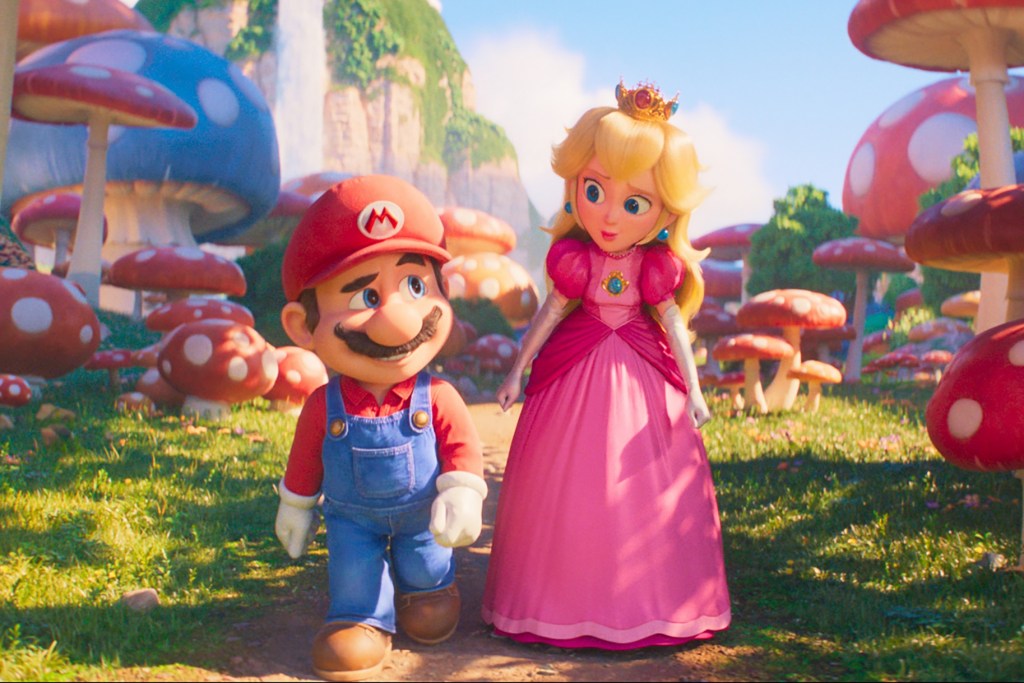
The Mario Bros. in the Super Mario Movie.
Mario and Luigi have a real winner in their first film in 20 years.

I thought the voice acting throughout was great. The only character that seemed miscast was Cranky Kong, voiced by Fred Armisen. However, the rest of the cast was solid. Princess Peach, voices by Anya-Taylor Joy, takes up as much screen time as Mario himself and maybe more than Luigi. Mario, voiced by Chris Pratt, and Luigi, voiced by Charlie Day, make up the heart of the film. The central theme of the film is the importance of their brotherhood. Throughout, we see Mario acting very protective of his less courages, and less capable, younger brother. That theme is present from the very first moments of the movie, and there’s a genuine sweetness in their love for each other.

But the plot as a whole is as complex as an plot in any Mario game. The Mushroom Kingdom is threatened by Bowser, who wants to marry Princess Peach, and Mario and Luigi arrive to save the day. As is the trend in modern films, Princess Peach couldn’t be relegated to a damsel in distress. Actually, even in the most recent Mario game, Princess Peach seemed to spurn both Mario and Bowser’s romantic advances to go on her own journey at the game’s conclusion. There’s nothing ground breaking or ultra feminist in Peach’s portrayal, but it was nice to see that she was written as a capable ruler of her kingdom. Rather than be relegated to the background, Peach takes a central role. She’s protective of the Toadstools who live in the kingdom and sincerely cares about the well being of the people around her. Mario is still positioned as someone uniquely capable of helping, since he never accepts defeat and is willing to keep getting back up no matter how many times he’s knocked down. The two play off each other very well as they both do their part in saving the kingdom from Bowser. That relationship is accented by memorable characters throughout the film, from the apes of Kong Kingdom to the imprisoned, humorously nihilistic Luma.

In fact, all the relationships are portrayed fairly well.

At the end of the day, the Super Mario Bros. Movie is one of the most profitable films ever, having taken in nearly $1.5 billion in revenue. Does it deserve that number? That’s subjective and depends on your tastes. Just, take the Mario movie on its own terms. If you’re looking for a tear jerker in the spirit of Up or Wall-E, you won’t find that here. You won’t have the deeply interwoven message of coming to terms with your own adulthood like was found in Inside Out. But the film is a lot of fun, and sometimes, that’s all you need.

Game Review: Dredge

Go for a quiet fishing trip. Meet Cthulhu.


One of my favorite games ever created is Sunless Sea. Set in the world of Fallen London, the game Sunless Sea involved you sailing from one port to another in a great underground ocean located in a cave called The Neath. The gameplay was largely you sailing around and exploring. Occasionally, you got into combat with underwater beasts, some of unfathomable dimensions, but the game was largely focused on finding exotic new locales and going through the story beats. It was one of the best written games I ever played.

It also created a gaming niche I didn’t even realize I needed to have filled – Lovecraftian inspired sailing. There just aren’t a lot of games where the focus is on being a sailor and encountering bizarre forces inspired by Lovecraft’s canon. In fact, the only other game I played that remotely scratched that itch was Sunless Skies, the space-based sequel in which you piloted a train rather than a boat.

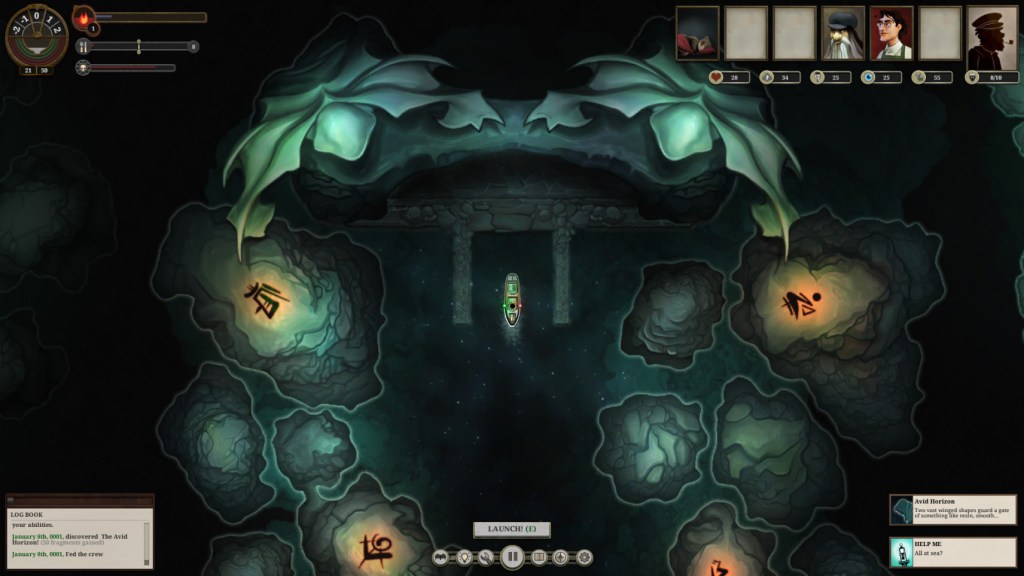
The Avid Horizon of Sunless Sea.
Your gameplay will look mostly like this, just you overseeing your boat as you sail around the map.

So, when I heard about Dredge, I was fascinated. Here was a game in which you were going to be sailing around the map and mostly just fishing. You would get into some interesting side quests with quirky characters. And, along the way, you would also run afoul of the Cthulhu inspired monstrosities that filled the world. The developers of Dredge described Sunless Sea as a “spooky boat” game. That same title can be applied to Dredge.

Because from the moment that you load up the game, it’s made very clear that something is amiss in the islands in which you will be doing your fishing. People warn you not to be out too late at night. It’s good advice – just as in Sunless Sea, the game Dredge has a panic meter that rises as you sail the unknown. Your panic increases the later it gets, and can be made higher by random encounters on your map, such as piloting through red clouds of mist or getting attacked by sea beasts. The more your panic rises, the more you are more likely to encounter enemies that are single mindedly set on destroying you. Of course, you have no way to fight back. You’re just a fisherman, after all.

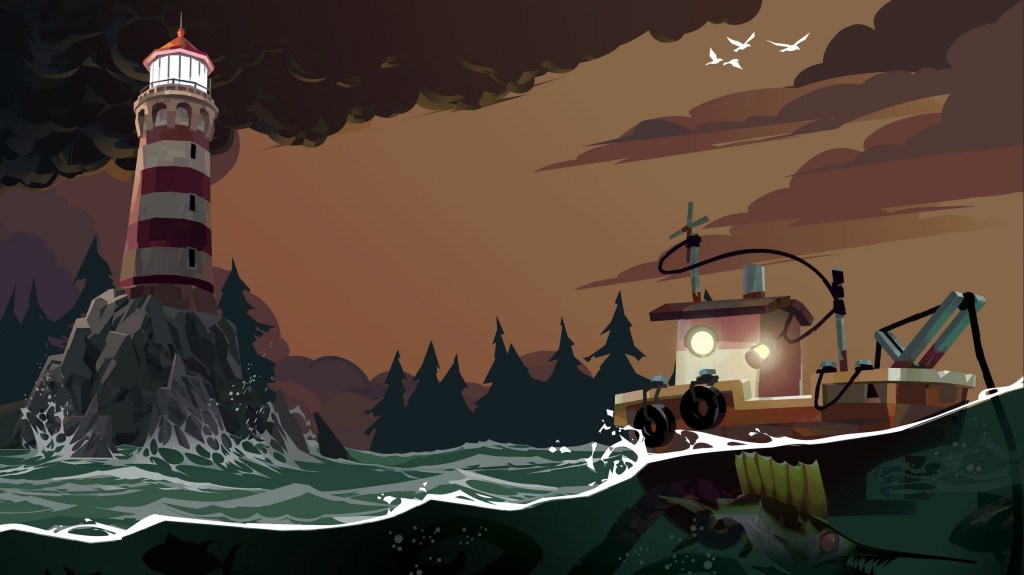
Dredge promotional art.
Spooky boat simulator.

So, fishing is actually going to be the core of the gameplay loop. Some parts of the map are more dangerous than others, but you need to explore them to complete quests. You can upgrade your boat to take more damage and even acquire abilities that will make it easier to avoid taking hits. But upgrading a boat takes money, and you can only make money by going fishing. And there’s a lot of fishing you can do. While you only start with a simple fishing line, you can upgrade the line to fish in ever more exotic environments. You also get access to crab pots and trawling nets that can add even more fish to your hauls, meaning more money for upgrades.

But while the fishing is the core gameplay loop, it wouldn’t mean much without an interesting world to fish in. Dredge provides you with an island chain that contains five main sections, each unique in their own way. While the peaceful islands of The Marrows provide you with a hospitable start from which to fish, the volcanic and ruin strewn islands of The Devil’s Spine are much more difficult to navigate and survive in.

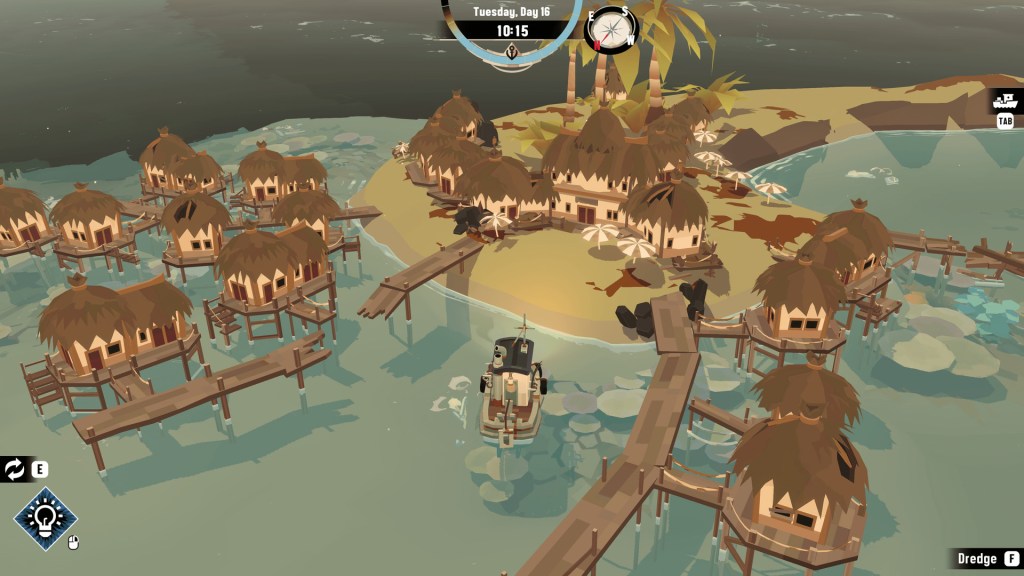
Island resort in Dredge.
Just one of the many locales you can visit as you sail the islands.

What really moves the story forward, though, are the quests. There is one central, overarching questline that takes you through the entirety of the islands. Yet every island chain has its own unique questline to work through. Each questline also reveals a little more about the threats the world is facing and the consequences there might be if the Cthulhu like being beneath the islands were to ever wake up. Messages in bottles reveal bits of story as well and help the player understand the motivations of the sea captain they are playing as. In fact, there’s a lot of story packed away in those messages-in-bottles and they really shouldn’t be missed.

If I were to criticize Dredge in an real significant way, it would be to say that the game never went far enough with exploring its own world. Again, the best comparison is Sunless Sea. In Sunless Sea, multi part quests reaped what were sometimes terrifying revelations. Hours would go into completing those quest chains and personal relationships between characters fleshed out. Even exploration was more in-depth when you pulled into port. As a great example, in Sunless Sea, you have to stock up on items to explore a cathedral at one juncture in the game. It’s a long series of you basically reading descriptions of the cathedral and then making decisions, such as whether to use the stairs or try and use ropes to climb upward. Each decision was a gamble and based on your stats, and at each stage in your ascent, you would read sometimes chilling descriptions of what happened there. Dredge has a lighthouse you have to explore at one stage and while you do need a specific item to get inside, there is no sense of exploration. You simply go upstairs and come back down.

A character in Dredge.
These characters need even more in-depth storytelling – but they are still great as is.

So, my one wish would be that Dredge tackle its land based explorations more thoughtfully. It could borrow from the quest structure of Sunless Sea and I think people would be very happy with the outcome. With that said, though, Dredge remains a fantastic game and one of the few examples of a spooky boat simulator that exists. It’s also unexpectedly relaxing to simply go out fishing – even if that relaxation turns to terror once the night descends.

TV Review: Picard, Season 3

Going out boldly.


If you haven’t kept up with the world of the Paramount+ show Picard, I can’t blame you. The first season of the show started with lots of promise. At its beginning, it seemed to be an insightful review of Data’s legacy and the nature of humanity. You know, the typical topics that the Star Trek franchise has historically been about. It quickly became an action stuffed, poorly paced show that ended with a Galaxy threatening enemy the audience had previously never been introduced to. So, while seeing some old, familiar characters was nice, the overall tone of the show was incredibly uneven. Still, it was decent enough to have hopes for Season 2.

And boy, did Season 2 seem to have a good sales line. It promised to bring back Q, the omniscient, omnipotent being who had repeatedly locked horns with Jean-Luc Picard during his time as captain of the Enterprise. The episodes featuring Q had been some of the best with regard to showing us how insignificant, yet paradoxically important, humans were in the scope of the Galaxy. It’s too bad that Season 2 of Picard barely featured Q at all and instead of taking us to the stars, stuck us in modern day Los Angeles. Worse, the overall lesson, that Picard needed to learn to love, was poorly handled throughout the season. Somehow, Season 2 was far worse than Season 1.

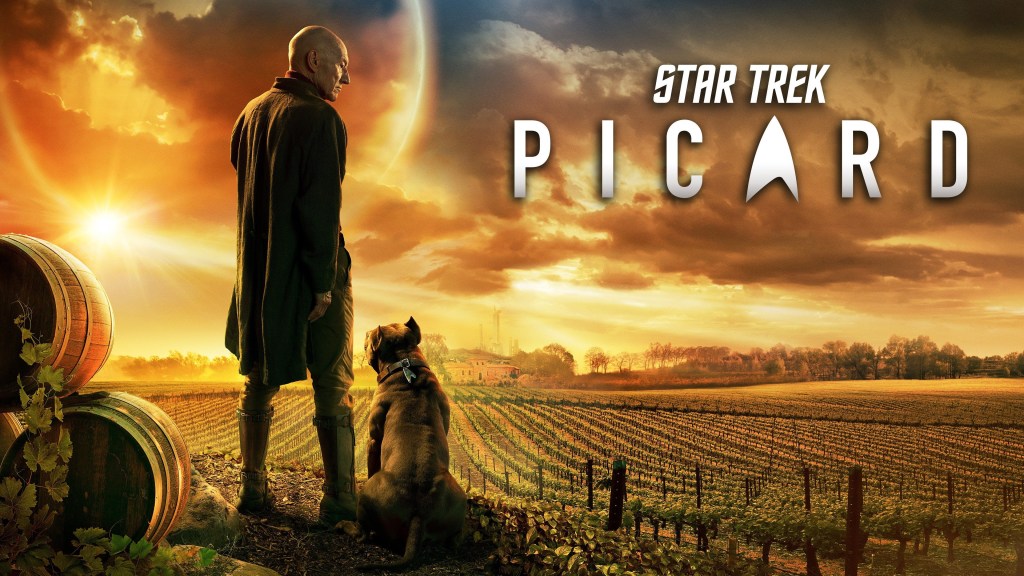
The Picard series.
An uneven series with an incredible finale.

So it took me a while before I was willing to watch Picard Season 3. But, I couldn’t ignore the whispers I was hearing from all corners of the internet. “It’s actually good!” I kept hearing that it was a major shift, but after all of my disappointment, it took time before I was willing to revisit the show.

Wow. Am I glad I did.

Picard’s Q.
Did you know after Star Trek that he put on operas?

I want to preface this by saying there were multiple episodes of Picard where I outright cried. There were multiple episodes of Picard when I cheered. This is not the slow paced, cerebral show that Star Trek: The Next Generation was. So, if that’s what you’re looking for, you’ll be disappointed.

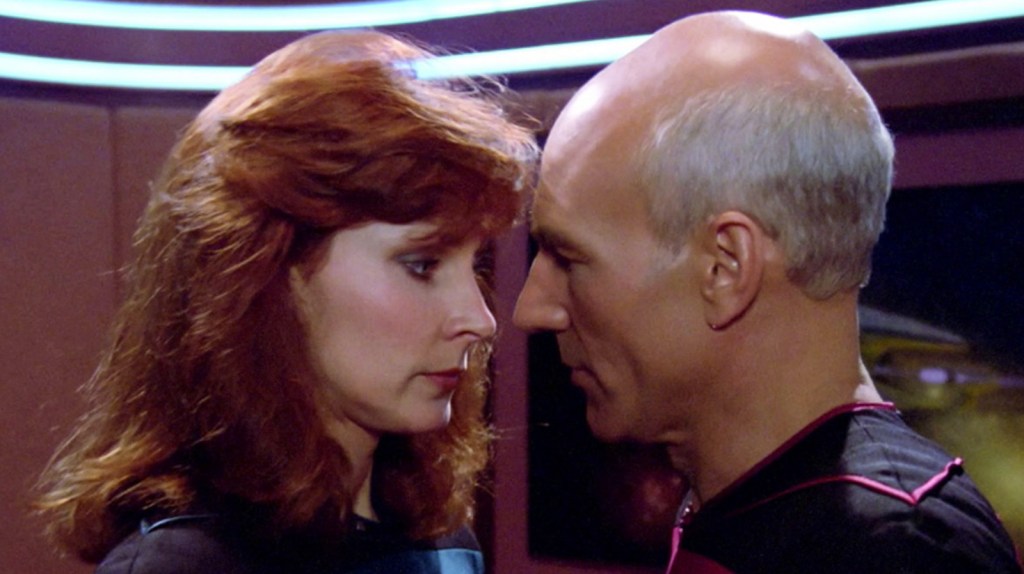
So what is it that makes Season 3 so good? It’s the crew of the U.S.S. Enterprise. Season 3 brings back everyone you loved from TNG. Picard, is of course, at the center of the show. But right next to him is River in the command chair. Deanna is here to feature her empathic powers once again. Geordi returns to flaunt his engineering brilliance. Word is back at tactical – and a badass. Data, inexplicably, makes a welcome return. And nobody is more central to the story than Beverly Crusher, whose storyline is intimately tied up with Picard’s.

There was a time this was the only relationship I shipped.

To my frustration, it feels as if the show runners realized many of the new characters introduced in Season 1 didn’t work and so, through Season 2, they just got rid of all of them. By Picard Season 3, only one new character really remains. Raffi. With that said, her return is welcome, as she was one of the only characters with any real character. With that said, she’s also joined by Voyager and Picard alum, Seven of Nine, who has consistently been an incredible character in the Star Trek franchise.

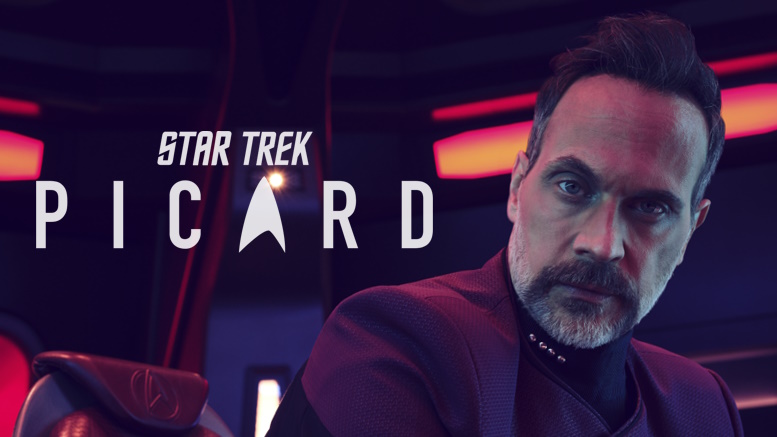
And somehow, Picard Season 3 does something it hasn’t been able to do for two previous season and introduces even more characters that you want to see more of. To even discuss some of them would be to give away spoilers, but one I can talk about is Captain Liam Shaw. A captain that Picard is forced by circumstances, he’s everything that Picard is not. He’s so by the books you wonder how he became captain. He seems to exhibit very little in the way of bravery or willingness to sacrifice himself from others. Yet, he makes such an impact that by the end of the show, he was one of my favorite additions to the Star Trek series in recent years.

Liam SHaw.

So, new, memorable characters? Check. Old beloved friends? Check. But there’s also the plot, which is actually interesting. For half the season you’re left wondering how this grand conspiracy could be unfolding around Picard and leaving the Federation so helpless in the face of its adversary. Again, I can’t say much without spoiling the show, but there are multiple times you’re left guessing and when the reveals come, you’re left wondering if Picard and crew really can save the day. The enemies are worth waiting around for.

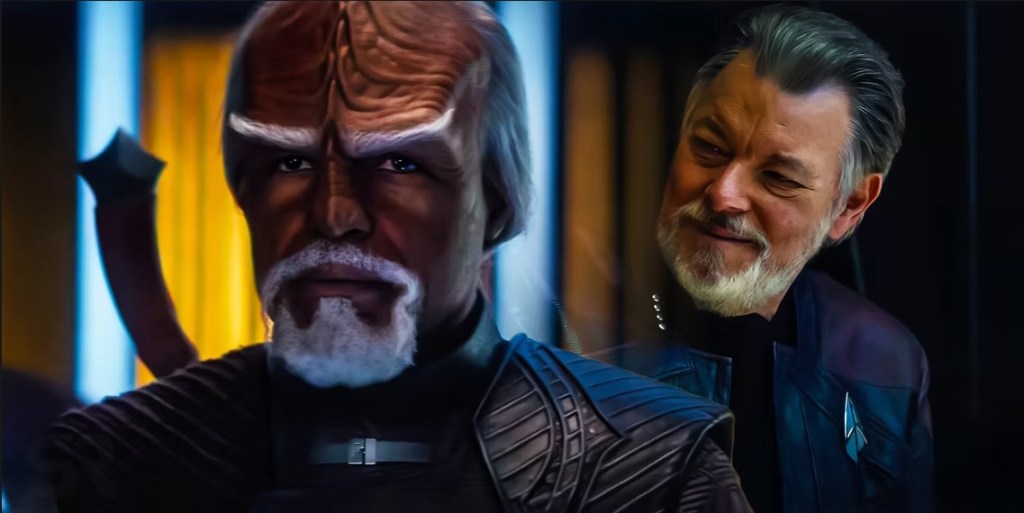
But even when the show loses its footing a bit or when the pacing starts to drag a little, you’re always caught wanting more because of that one thing – Picard and craw. To see the full crew back together after decades, to see them working together and with a new generation of Star Fleet to save the Federation, it really is touching. So many times, just seeing the small interactions between River and Deanna or between Data and Geordi made me tear up. This crew, this cast, loved each other, and it shows in every scene. Actors Jonathan Frakes (Riker) and Michael Dorn (Worf) seem to be having particular fun in every scene the share together.

Worf and Riker in Picard.
These two are having a hell of a time.

When the show’s finally done, you’re left applauding for your old heroes having returned, but also left wanting a new Star Trek show featuring the new generation of Star Fleet that’s been assembled. It’s really quite the feat that Picard pulls together old and new to not only celebrate the past but carve a way to the future. Along the way, it touches on the importance of friends, the nobility of the individual, and the importance of always working together toward a better future. It’s a fantastic season of television, and I’m glad that I finally watched it. If it’s not clear, then I highly recommend watching Picard Season 3.